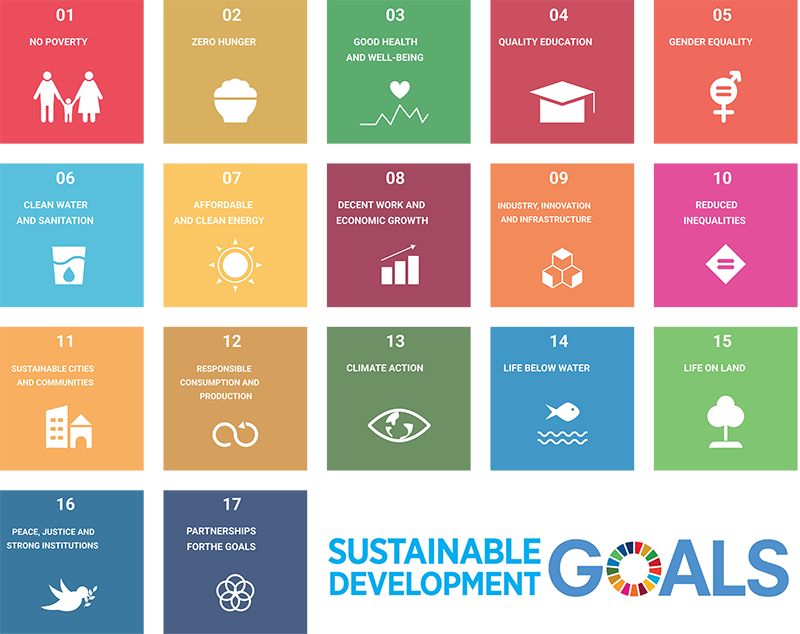
Our Sustainable Development Goals (SDG) initiative for Grades 3 to 7 is inspired by the global vision of the United Nations to create a more inclusive, equitable, and sustainable world.
Through integrated classroom lessons, project-based learning, and community engagement activities, students explore key themes such as environmental conservation, good health and well-being, quality education, clean energy, responsible consumption, and climate action.
Learners participate in eco-club activities, tree plantation drives, waste segregation projects, awareness campaigns, and collaborative discussions that connect academic concepts with real-world challenges. These experiences nurture responsibility, empathy, leadership, and problem-solving skills.
By encouraging informed choices and sustainable habits, our SDG program empowers students to become thoughtful global citizens committed to building a better tomorrow.
Students actively collaborate on sustainability projects, researching real-world challenges and presenting innovative solutions.
amenities
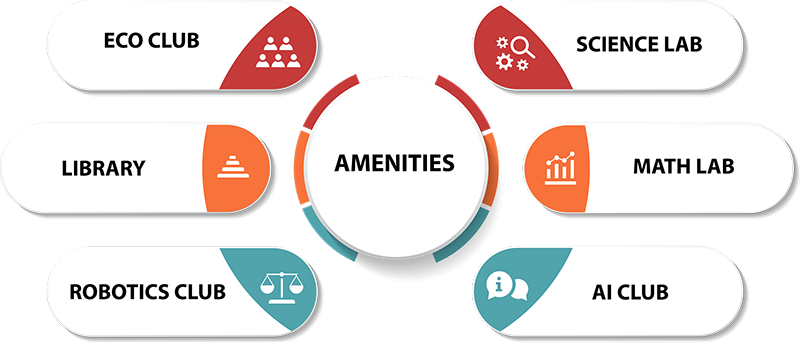
amenities
Our institution fosters holistic growth by combining academic excellence with real-world awareness and innovation. Through well-equipped labs, clubs, and learning spaces, students gain practical knowledge alongside strong values. We strive to create a supportive environment that nurtures curiosity, responsibility, and future-ready skills.
We nurture creativity and critical thinking to prepare students for global challenges and lifelong learning.
Humanities

Humanities
The Humanities curriculum for Grades 3 to 7 helps students understand the world around them through the study of History, Geography, and Civics. Learners explore communities, cultures, environments, and important historical events to develop awareness of society and global connections.
Through interactive lessons, projects, map work, and discussions, students build critical thinking, research, and analytical skills. The curriculum encourages curiosity about different cultures, traditions, and perspectives while nurturing respect, responsibility, and citizenship values.
By connecting classroom learning with real-life situations, students develop a deeper understanding of social structures, environmental responsibility, and their role in shaping a better future. Humanities empowers young learners to become informed, empathetic, and responsible global citizens.
Students are encouraged to participate in debates, role-plays, storytelling, and project-based activities that make learning meaningful and engaging. These experiences strengthen communication skills, collaboration, and confidence while helping students express their ideas clearly and respectfully.
SELF AWARENESS AND PERSONALITY DEVELOPMENT
COORDINATION AND TEAM WORK

PROBLEM SOLVING AND DECISION MAKING
COMMUNICATION AND INTERPERSONAL SKILLS
PEDAGOGY
- Yoga and Fitness
- Athletics
- Swimming
- Optional
- Table Tennis
- Soccer
- Basketball
- Cricket
- Chess
- Carrom
- Optional
- Classical Dance
- Western Dance
- Vocal Music
- Instrumental (Guitar)
- Instrumental (Keyboard)
- Optional
- Artistic Expression
- Block Painting
- Origami
- Optional
- Field Trips
- Exhibition
- Project Based Learning
- Student-Led Conference


Frequently Asked Questions
Teachers play a central role in education. They impart knowledge, facilitate learning, and help
students develop critical thinking skills. Teachers also contribute to the social and emotional
development of students.
Teachers play a central role in education. They impart knowledge, facilitate learning, and help students develop critical thinking skills. Teachers also contribute to the social and emotional development of students.
Teachers play a central role in education. They impart knowledge, facilitate learning, and help students develop critical thinking skills. Teachers also contribute to the social and emotional development of students.
Teachers play a central role in education. They impart knowledge, facilitate learning, and help students develop critical thinking skills. Teachers also contribute to the social and emotional development of students.